Showing posts with label Christmas. Show all posts

Friday, December 25, 2009

A Christmas Day lunch


There's nothing more satisfying - or necessary - than sitting down with a soothing cup of peppermint tea and putting up your feet after hosting a successful Christmas Day lunch. The food has been devoured, the dishes washed and put away, the wrapping paper tidied up and presents sorted. In my case, I have a lovely stack of glossy new cookbooks to add to my pile. I can't wait to start cooking from them.


We hosted 16 people at our Christmas Day lunch but it was nowhere near as daunting as that sounds. Everyone was delegated to bring something: drinks, nibblies, a salad or two, dessert etc. As hostess, I was providing the ham and the turkey and lots of salad bowls and white platters for presentation.

My family likes a traditional Christmas lunch (by that, I mean the Anglo traditional lunch, with ham, turkey and plum pudding) but we are happy to add our own twists and interpretations. None of us are huge fans of a whole cooked turkey and I didn't want to spend Christmas morning trapped in the kitchen with a hot stove. So I ordered a turkey breast roll from my excellent local butcher (much faster to cook, with lots less angsty) and found a recipe for roast herbed turkey roll in the December 2009 issue of Gourmet Traveller (a magazine that Suzie from Munch+Nibble and I are focusing on this month in the We Made This challenge, where we aim to cook as much as we can from a selected magazine each month).

This is a lovely recipe - very stress-free for Christmas Day, with an excellent end result that belies the minimal effort involved. Combined with ham, roast chicken, a vast array of salads (including seafood, sweet potato, green salad, roast potatoes and a beetroot, walnut and feta salad) and several bottles of Seppelts Sparkling Shiraz, this dish was part of our stunning Christmas feast that satisfied all and meant groaning stomachs could barely accommodate dessert, let alone tea that night.


Roast herbed turkey roll with Meyer lemon mayonnaise

Recipe from the December 2009 issue of Gourmet Traveller

1 turkey breast (about 1.4kg), skin on (note - my turkey breast was 2kg and I did not adjust the recipe but this portion was adequate)
1 cup (loosely packed) each basil, flat-leaf parsley and mint, coarsely chopped
2 garlic cloves, finely chopped
Finely grated rind of 1 Meyer lemon (Meyer lemons are slightly sweeter than regular lemons, but it is fine to substitute if you can't find Meyers)
60ml extra-virgin olive oil

Meyer lemon mayonnaise
1 egg yolk
25ml Meyer lemon juice
2 tsp Dijon mustard
150ml light olive oil
Finely grated rind of 2 Meyer lemons

Preheat oven to 180 degrees. Place turkey breast skin-side down on a work surface and make an incision lengthways along the thickest part of the breast to butterfly. Open flat and season to taste.

Combine herbs, garlic, rind and half the olive oil in a small bowl, season to taste and spread evenly over turkey. Roll into a long cylinder, tucking ends under, then tie securely at intervals with kitchen twine./

Place turkey on a wire rack in a roasting tray, drizzle with remaining oil, season to taste and roast, basting occasionally, until golden and juices run clear when pierced with a skewer (1 hour 10 minutes to 1 hour 15 minutes - longer if your turkey breast is larger). Remove from oven, cover loosely with foil and rest for 15 minutes.

Meanwhile, for Meyer lemon mayonnaise, combine yolk, juice and mustard in a small bowl, whisk to combine, then add oil in a thin, continuous stream, whisking continuously until incorporated. Add rind, season to taste and set aside.

Serve sliced turkey with mayonnaise to the side.

Thursday, December 10, 2009

A spicy side of Christmas


Heady spice mixtures and plump dried fruit feature heavily in Christmas baking. Many of the traditional dishes we've inherited from England, such as Christmas cakes, fruit mince tarts and plum puddings, are chock-full of these ingredients. But other nations have similar traditions: the spicy Dutch speculaas biscuits and golden fruit-studded panettone or panforte, a spicy mix of glace fruit and nuts, from Italy, for example.

For many years I've made a chocolate panforte at Christmas. No matter how full we are, everyone always finds a small hole in their stomach when the plate of panforte, dusted with icing sugar, comes out with coffee. In last year's Christmas issue of Gourmet Traveller, I found a recipe for panpepato, which is very similar to panforte. With a newborn in the house last Christmas, there was no time to make the panpepato but it was one of the first things on my list for this year (as this recipe came from the December 2008 issue, it doesn't strictly fit into the We Made This challenge that Suzie from Munch+Nibble and I are doing, but I'm including it anyway, as I haven't had a chance to cook as much from this year's edition as I'd hoped!)

According to Gourmet Traveller, panpepato is a Christmas specialty from the Siena region of Italy. It is similar to panforte but is spiced up with black pepper and cocoa or chocolate. "The hsitory of panforte and panpepato are intertwined and it's difficult to distinguish which came first and what their true provenance is," Emma Knowles wrote in her article on panpepato. "Legend has it that panpepato possessed powerful aphrodisiac qualities and also had the ability to stop husbands and wives from fighting, both of which are great reasons to whip up a batch yourself."

Panpepato is easy to make, although you will need a sugar thermometer and some confidence in cooking a soft caramel. The mixing stage needs to be done very quickly or you end up with a big, gluggy, unusable mess on your hands.

The recipe specifies that the panpepato should be baked in five 10cm-diameter springform pans. I made mine in a 20cm springform pan, as I don't have the smaller pans, and adjusted the cooking time slightly. The end result was fine but I do think the smaller versions would work very well if you wanted to give these away as gifts. Panpepato would make a wonderful gift for your friends: this is a wonderful cake, like a sexy older sister version of panforte. The dark cocoa gives it a luxurious element, while the spicy aftertaste of peppercorns lingers teasingly on the palate. This is a dish that I will definitely be making again.

Panpepato

Recipe from Gourmet Traveller, December 2008 (available on the GT website)

2 sheets of confectioner's rice paper
50gm plain flour
40gm Dutch-process cocoa
1 Tb ground mixed spice
1 tsp ground coriander
1/2 tsp freshly ground black pepper
2 tsp coarsely crushed pink peppercorns
200gm candied orange, coarsely chopped
80gm almonds, roasted
80gm each walnuts and hazelnuts, roasted and peeled
150gm caster sugar
150g honey
Pure icing sugar, to dust

Preheat oven to 150 degrees. Lightly grease five 10-cm diameter springform pans, line bases with baking paper and then rice paper, trimming to fit. Sift flour and cocoa into a bowl, add spices, orange and nuts and toss to coat well in the flour mixture.

Heat caster sugar, honey and 2 Tb water in saucepan over medium heat, stirring until sugar dissolves. Do not stir again, as mixture may crystallise. Bring to the boil and cook until mixture reaches 120 degrees on a sugar thermometer (soft ball stage). Working quickly with a lightly oiled spoon, pour caramel over nut mixture, mixing well. Spoon into prepared pans and smooth tops with an oiled spatula. Bake for 10-15 minutes (time it carefully because this cake will not firm up or colour as it cooks). Cool completely in pans, turn out, then dust liberally with icing sugar. Serve cut into wedges (note that this cake is rich and a little will go a long way).

Panpepato will keep, wrapped in baking paper, and then plastic wrap in an airtight container in a cool place, for up to one month. To present as a gift, wrap panpepato in baking paper before wrapping as desire.

Monday, November 30, 2009

Snowy drifts of sugar


So many of the traditional Christmas baking dishes that we favour seem wrong for our climate: hot roast dishes, rich puddings and dense spicy treats are perfect for a snowy, northern hemisphere Yuletide but seem inappropriate when we're more likely to be heading to the beach.

Yet the tradition persists. To me, the aroma of spices such as cinnamon, nutmeg, ginger and cloves are the essence of Christmas and conjure up images of sweet treats that we can eat with a reckless abandon that doesn't exist during the rest of the year (or why else are the January magazines full of post-Christmas diets?)

It is a time of excess, particularly in relation to baking. A slice of panforte here, a wedge of fruit cake there, here a mince tart, there a spiced biscuit ... there's plenty of excuses to indulge.

Despite my mounting pile of recipes, it's nice to return to some old favourites. I adore spiced biscuits and cakes - put the word "spiced" into the title of a recipe and you have my attention immediately. These cute little spiced biscuits by Donna Hay, finished off with a dusting of snowy icing sugar, are a perfect way to offer season's greetings.

Sugar-dusted spice biscuits

125g (4 0z) butter, softened
3/4 cup (150g/5 oz) brown sugar
1/4 cup (95g/3 oz) golden syrup
1/2 teaspoon vanilla extract
1 egg
1 3/4 cups (235g/7 oz) plain flour, sifted
1/2 cup (55g/ 1 3/4 oz) hazelnut meal
3/4 teaspoon ground cinnamon
1/2 teaspoon allspice
1/4 teaspoon grated nutmeg
1/4 teaspoon ground cloves
1/4 teaspoon bicarbonate of soda
icing sugar, for dusting

Preheat the oven to 180 degrees Celsius (350 degrees Fahrenheit). Beat butter, brown sugar, golden syrup and vanilla extract with an electric mixer until pale. Add the egg and beat well. Add the flour, hazelnut meal, spices and soda and beat until just combined.

Roll two teaspoonfuls of mixture into balls and place on baking-paper-lined baking trays, allowing room for spreading. Bake in batches for 8 minutes, or until light golden. Cool, then dust with icing sugar.

Recipe from Donna Hay Magazine, issue 12

Thursday, November 19, 2009

Melbourne Larder Christmas cake


When I started planning to make my Christmas cake, I didn't factor in the weather. I imagine that it would wonderfully comforting at this time of year in cold England to have an oven emitting warmth and a kitchen filled with spicy aromas as a fruit cake gently cooks in the oven, but it is definitely the wrong thing to be doing in a hot Australian kitchen when the temperature is already 30 degrees at 7am.

But the dried fruit had been macerating in Irish whisky for three days and I couldn't put off the baking any longer. It was time to whisk up the cake batter and turn on the air-conditioner and let my cake bake slowly for three hours.

Fruit cakes seem to have fallen out of favour over recent years. I know very few people who still bake a Christmas cake every year. Fruit cake is certainly not glamorous or showy like a chocolate or celebration cake but it does have a certain richness and comfort factor. A rich cake densely studded with plump fruit and nuts and laced with alcohol is a delicious afternoon treat with a cup of tea, especially in winter. And, although it is not ideally suited for a hot Australian summer, fruit cake has a Christmassy air about it to me. I confess that my favourite Christmas treat is now a slice of spicy, chocolatey panforte but I still have a soft spot for a good old-fashioned Christmas cake.


In Christmas 2007, after reading through my collection of fruit cake recipes, I came up with my own version, which was a hit with the family. Most fruit cakes are quite similar - it's a matter of choosing your preferred dried fruit and then working out the proportions of butter, sugar, eggs, flour and spices for the cake batter.

People often think they need to set aside a large portion of time to make a Christmas cake. However, the cake is actually very easy to make and just requires preparation and forward planning in order to allow time to macerate the fruit and then to bake the cake. Long, slow baking is the key that turns the thick batter into a rich, dense cake. The other secret is to line the cake tin with brown paper to help protect the cake from drying out through its long cooking time.

Melbourne Larder Christmas cake

250g sultanas
250g currants
250g raisins
60g prunes
100g dates
100g dried apricots
100g glace cherries
300g plain flour
1 teaspoon baking powder
250g butter
250g brown sugar
4 eggs
150ml brandy (or sherry, port or whisky)
1 teaspoon vanilla extract
1 teaspoon nutmeg
1 teaspoon mixed spice
1 teaspoon ginger
1 teaspoon cinnamon
1 tablespoon golden syrup
zest of 1 lemon

Soak dried fruit in 100ml brandy overnight. (This year I soaked the fruit in 150ml Irish whisky for three days in the fridge and this gave a deeper, mellower flavour. If you have time, I recommend this; but the cake will still taste fine if you only macerate the fruit overnight.)

The next day, pre-heat the oven to 150 degrees and sift together the flour, baking powder and spices.

Cream the butter and brown sugar with an electric mixer until light and fluffy. Add the eggs and flour mix alternately. Lastly mix in the vanilla extract, soaked fruit, golden syrup and lemon zest.

Turn into a lined 20cm square cake tin.* Scoop centre into a light hollow to allow for rising. Place whole blanched almonds in a pattern around the edges of the cake. I sometimes make a little flower pattern in the centre as well.

Bake for 2 to 3 hours (cover with foil if the top is browning too much). Remove from oven and drizzle over the extra 50ml brandy. Cool completely in the tin and then turn out. Wrap the cake in several layers of greaseproof paper and then in foil and store in an airtight tin in a cool place until Christmas.

* The base and sides of the cake tin are lined twice - with brown paper and greaseproof paper. Lay two sheets of brown paper onto the bench, making sure it is larger than the tin. Trace around the base of the tin and then cut diagonally in from the sides to the base-line. This will allow the paper to fold neatly into the tin with no cracks for the cake to leak through. Repeat with a sheet of greaseproof paper.

Monday, November 16, 2009

Preparing for the festive season


Christmas-time is my baking highlight of the year. I stress the word "baking" because savoury dishes such as turkey and ham don't really come into the equation, although I do enjoy planning the main meal as well. I love baking Christmas treats: gingerbread, panforte, panettone, lebkuchen, shortbread, mince tarts, Christmas cake ... the list is long.

It's time to load up my shopping trolley with bags of dried and glace fruit, different types of nuts, spices such as ginger, cinnamon and mixed spice, and plenty of flour, sugar, butter and eggs. The kitchen fills with the heady, mouth-watering aroma of cakes and biscuits as they cook - a spicy smell that I always associate with Christmas and its delicious traditional dishes.

There are many cliches associated with Christmas and it can be a difficult time of year for people who feel forced to try and live up to the ideal of "festive cheer". But I'm fortunate in that Christmas was always a fun and social time of the year for my family. With relatives spread around the state, it was a good chance for everyone to get together and indulge themselves with good food.

The Christmassy treats that we served up for morning and afternoon tea were just as much a part of our celebrations as the turkey, ham and plum pudding. Everyone had a specialty and we eagerly looked forward to the chance to savour delicacies only available at that time of year.

I love learning about the different traditional dishes and adding them to my repertoire. To my Anglo traditions of shortbread and mince tarts, made to my grandmother's recipes, I've added a decadent chocolate panforte and my auntie's lebkuchen biscuits. Other dishes I've tried included buche de Noel (France), stollen (Germany) and panpepato (Italy).

But each year the list grows longer, as I find more books and recipes to add to the pile. Murdoch Books has recently released Cooking for Christmas, a sumptuously photographed book that has recipes for soups, entrees such as potted prawns, main dishes with all the trimmings, puddings and edible gifts. I'm trying to resist buying another cookbook but there are some excellent recipes in there...

I have the delicious magazine Christmas special from last year, to which I've added a Women's Weekly version that I bought last week. I'm eagerly awaiting the December issues of delicious, Gourmet Traveller and Donna Hay Magazine to find out what goodies are on offer this year, and I've been busily combing through past issues of Donna Hay Magazine to gain inspiration.

What dishes will make it onto my baking list this year? Chocolate and Grand Marnier buche de Noel from Gourmet Traveller? Stefano de Pieri's panettone? Gourmet Traveller's recipe for panpepato? Or old favourites, such as my chocolate panforte or a panforte that matches perfectly with Rutherglen muscat? It's time to write out the shopping list and fire up the oven ...

Saturday, December 27, 2008

Christmas baking


I can't believe Christmas has come and gone already. It feels like I just finished last year's Christmas dinner and here we are again, bellies groaning from good food while we pack up presents and throw out the wrapping paper and rubbish.

Christmas is my favourite time of the year and I love the preparation for Christmas: soaking the fruit for puddings and cakes, setting aside a day to steam the pudding, choosing which sweet treats to make for gifts (nougat, chocolate fudge, panettone, spiced biscuits) and making our family's traditional favourites of shortbread and mince tarts.

This year though, my Christmas preparation and baking was very limited, as we have a newborn in the house and there was not much free time available to do any baking. However, I've been stockpiling a collection of new recipes to try next year. Of course there's no reason why I can't make shortbread or panforte at any time of the year but it just doesn't feel right!

Two days before Christmas, my reservation at the local library for Nigella Christmas arrived. It's a sumptuous book, lavishly photographed and full of delicious and inspiring recipes. There's cocktails and canapes to start, followed by soups, salads and side dishes, different ways to cook turkey, goose, pork and beef, main dishes for vegetarians, sweet treats and edible gifts. I love the way Nigella writes about food. Her comforting, practical tone is combined with a sweet turn of phrase that makes you feel you can tackle any cooking task she sets. I must admit though that, although I've been collecting Nigella recipes for years, I've never actually made any of them, even though I've been inspired to many times. So, when I saw the recipe for the Yule Log, which looked impressive but used only a few basic ingredients (eggs, caster sugar, cocoa, butter), I thought it was the perfect dish to quickly whip up for our Christmas Eve meal.

And so it proved to be. I made a basic chocolate roulade that is spread with a rich chocolate butter cream and then rolled up into a log shape and covered with the rest of the butter cream. A few squiggles with a skewer to make it look like a log, a dusting of icing sugar to make it look like the log is covered in snow and voila! an authentic yule log. Although Nigella says in her recipe notes that the recipe looks finicky and is not a doddle to make, I found it quite easy to put together and thought that the final result was impressive and made it look more difficult than it actually was.

Christmas might be over for this year, but I'm looking forward to trying many more of the recipes from the Nigella Christmas book. A lot of the salads and the sweet treats, such as rocky road and gingerbread, can certainly be made year round. It will elevate your Christmas feast to a domestic goddess level but it's not a book that needs to be put away and only referred to once a year.

Saturday, December 15, 2007

Spiced biscuits for Christmas


With just 10 days to go until Christmas Day, it's time to get serious about Christmas baking. Now is the time to organise ingredients and a timetable for making sweet little edible gifts. My files are bulging with ideas, including recipes for gingerbread, nougat, shortbread, chocolate fudge or truffles, panforte and mince tarts. It's just a matter of deciding what to make. There are some old favourites that I love to make every year but I also like to try something new each year.

Last year, I gave little boxes of chocolate fudge and pistachio and cranberry nougat. I planned to repeat the process this year until I ran into the great liquid glucose brick wall. Last year, liquid glucose was on the shelf at my supermarket but this year it's nowhere to be seen and the local health food shop is out of stock.

With the clock ticking, as I needed my gifts ready for the next day when we were catching up with several groups of friends, the fudge was fine but I had to quickly come up with something else to accompany it. I wanted something quick and simple but with a Christmas theme, so I decided to give a festive twist to my grandmother's burnt butter biscuit recipe by adding some spices commonly associated with Christmas. The result was so good that I may make the spiced version far more often than the original!

These biscuits are another entry into Susan from Food Blogga's "Eat Christmas Cookies" event (in which I've previously entered lebkuchen). This event, which has been running all month, is a great source of inspiration and is providing me with a whole lot more biscuit recipes for my already massive file. Recipes have been posted from all around the world and it's been fascinating to learn about different traditions and ingredients, not to mention the lovely stories that accompany these recipes.

These little biscuits are extremely easy to make, keep well, are easy to store and transport as gifts and will be quickly devoured!

SPICED CHRISTMAS BISCUITS

115g butter
115g caster sugar
1 egg
200g self-raising flour
1 teaspoon each of ginger, cinnamon, nutmeg and cardamom
almonds for decoration (optional)

Melt the butter in a saucepan over a low heat until it is a light brown colour. Cool. Add the caster sugar and beat to a cream, then add the egg and beat well. Sift the flour and spices together and mix in until you have a soft dough. Roll into small balls and press half an almond in each (this is optional. The biscuits are just as nice without the almonds, so please leave out if you're worried about nut allergies). Leave room on the tray for the biscuits to spread. Cook in a moderate oven (180 degrees Celsius) for 10-12 minutes. Cool on a wire rack.

Monday, December 3, 2007

It's Christmas time - lebkuchen


Now that it's December, I feel I can officially get excited about Christmas. The trees and decorations have been all around town since November, but I don't feel like I can start celebrating until December begins. But now it's time to get into the full swing of Christmas baking!

I've already made my Christmas pudding and cake and they are maturing nicely in cool, dark places. Now I can turn my attention to spiced biscuits, panforte, panettone and all sorts of other sweet treats that will make good presents.

I'm not the only one preparing for Christmas baking. Susan from Food Blogga also feels that baking and eating is part of the true Christmas spirit and she is hosting an "Eat Christmas cookies" blog event. People from around the world have been sending in their favourite recipes, usually accompanied by a story about why these biscuits are special in their family.

There's many dishes I associate with Christmas, As I've already blogged about my grandmother's shortbread, this post is about my Aunt Margaret's lebkuchen biscuits. Margaret is of Austrian heritage and each Christmas she always made a huge batch of lebkuchen biscuits, a spicy biscuit topped with lemon icing. Rather than being eaten on Christmas Day, we feasted on them in the lead-up to Christmas and afterwards. After many years, I've finally obtained the recipe and this year I made my first batch of lebkuchen. They were delicious and will definitely become part of my Christmas baking repertoire each year.

LEBKUCHEN

1 cup honey
1 cup firmly packed brown sugar
1/4 cup treacle or molasses
1 tablespoon cinnamon
3 tablespoons finely chopped mixed peel
1/4 teaspoon nutmeg
1 1/2 teaspoons ground cloves
1 cup finely chopped blanched almonds (or use almond meal)
1/2 teaspoon bicarb soda
2 teaspoons hot water
1 egg, beaten
3 cups self-raising flour
1 1/2 cups plain flour

Mix honey, treacle, sugar, spices, mixed peel and almonds. Stir soda into boiling water and add to the fruit/sugar mixture along with beaten egg. Mix in flour, one cup at a time. This makes a very stiff mixture and must be thoroughly blended. Leave at least overnight in the fridge to ripen*.

Next day, roll out mixture to approximately 1/2 inch thick, cut into bars/shapes, place on baking paper-lined baking trays and bake in moderate oven (180 degrees Celsius) for 15 minutes. Remove from oven and cool on wire racks. While still warm, ice with lemon or orange-flavoured icing (I prefer lemon). Leave to set completely before storing in airtight containers. Makes approximately 80-90 biscuits.

* Note - dough can be left two or three days to ripen in fridge if desired - it only improves the flavour.

Wednesday, November 14, 2007

A month of Christmas baking


It might feel too early to be getting into the Christmas spirit, but Christmas decorations are being put up all around the city and boxes of shiny tinsel and fat mince pies have been in the supermarkets since October. I feel like we've barely packed up the decorations from last year and it's time to get them out again.

But I don't really mind because Christmas is my favourite time of the year. I love the preparations, particularly planning the Christmas Day menu and the food treats that I'll make as gifts.

Regardless of the weather, we've always had a traditional Christmas lunch in our house, with ham, roast turkey, roast vegetables, peas with mint sauce and tomatoes topped with breadcrumbs, followed by plum pudding with brandy sauce and thick custard. It's a menu more suited to the snowy English season than to a hot Australian summer but it's our tradition and we love it, despite the fact that seafood is now becoming a much more popular (and well-suited) choice. As my mum's birthday is on Christmas Eve, we usually have seafood or a BBQ that night (and Santa and his reindeer were always guaranteed a big slice of birthday cake to keep them going!)

November is the time to make plum pudding and Christmas cakes and to get organised for other baking. I've been stockpiling my supplies of butter, flour, sugar, dried fruit and nuts in preparation and have already picked up frozen suet from my butcher. I'm the designated pudding maker in my family and I'm also the custodian of my grandmother's recipes for shortbread and fruit mince tarts. To these old favourites, I've added new ones over the years, including a chocolate panforte, panettone, assorted gingerbread and spice cookies, and sweet treats for gifts, such as pistachio and cranberry nougat and chocolate fudge.

I wish I could say that I use an old family recipe for our Christmas pudding but that's not the case. My dad has fond memories of the rich plum pudding his mother made each year, with a penny hidden inside. It hung in its cloth wrapper in a cool dark place for at least six weeks before Christmas. Alas, the recipe appears to have died with her. The recipe I do use is an old one and it is from Stephanie Alexander's grandmother. It was first published in The Age many years ago and also appears in her book The Cook's Companion. I've been making it for many years now and it's always eagerly received. I make it in two old pudding tins that belonged to my great-aunt, rather than in cloth, as I've never had any luck using cloth. The pudding is extremely easy to make and the only drawback is that you need to set aside a day to make it, as it requires six hours boiling time (plus at least an hour's boiling time on Christmas Day to reheat it). But the end result is well worth it.

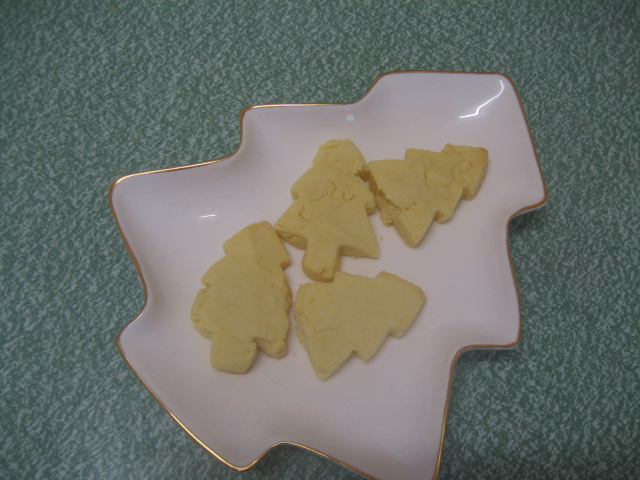
Here is my grandmother's recipe for shortbread. My grandmother and mother have made this every year for Christmas that I can remember and it makes a lovely gift. You can make this at any time of the year but it is a nice festive treat, particularly if you use a Christmas tree-shaped cutter.

SHORTBREAD

270g plain flour
60g rice flour
210g butter
90g caster sugar
a few drops of vanilla extract

Beat the butter until as white as possible. Add vanilla extract and then slowly add sugar. Continue beating until soft and fluffy. Sift flours, add to mixture and stir to a fairly dry dough.

Press dough out to approximately 2-3cms thick. Cut out with a Christmas tree cutter (or other shapes). Place on baking trays lined with baking paper and cook at 180 degrees for 10 to 15 minutes. Do not allow to brown. Gently lift with a spatula and cool on a wire rack.